Steel CNC Machining
Prototeque provides precision steel CNC machining, milling, and turning services for custom metal parts. We support projects from one-off prototypes and small-batch production to high-volume manufacturing.
Prototeque: Your Precision Steel Machining Partner in China
Prototeque is a manufacturer of high-precision steel components with over a decade of experience in metal CNC machining. We produce custom steel parts with 3-axis and 5-axis CNC milling capabilities for complex projects.
From small-scale prototypes to high-volume production, we provide steel CNC machining services for simple to intricate components.


Common Steel Alloys and Carbon Steels for CNC Machining
Selecting the right CNC machining metal is important for achieving the required strength, durability, and performance of your parts. Steel is widely used across various industries due to its strength, durability, and versatility. With experience in steel CNC machining, we work with a range of steel alloys to produce precision machined parts for different project requirements.
We specialize in:
AISI/SAE 1080: High carbon steel
AISI/SAE 1020: Mild steel
AISI/SAE 4140: Chromium-molybdenum alloy steel
AISI/SAE 1018 Mild Steel
AISI/SAE 4340: Nickel-chromium-molybdenum alloy steel
Common Surface Finishes for CNC Steel Parts
We offer a range of surface finishes and treatments to improve the appearance, durability, and corrosion resistance of CNC steel parts. Common surface finishes include:
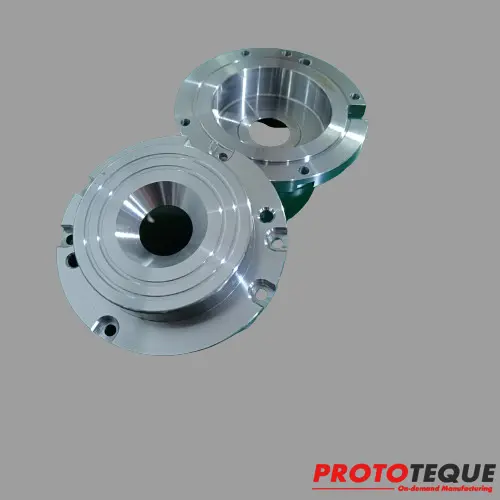
As Machined + Hard Chrome plating
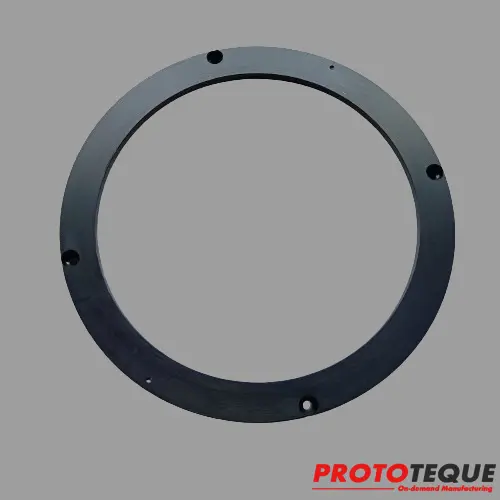
Black oxide
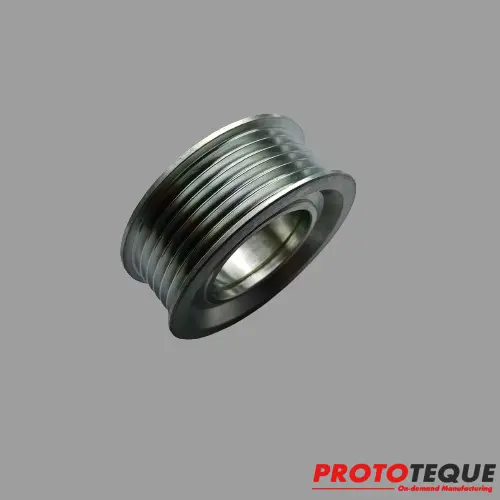
Zinc Plating
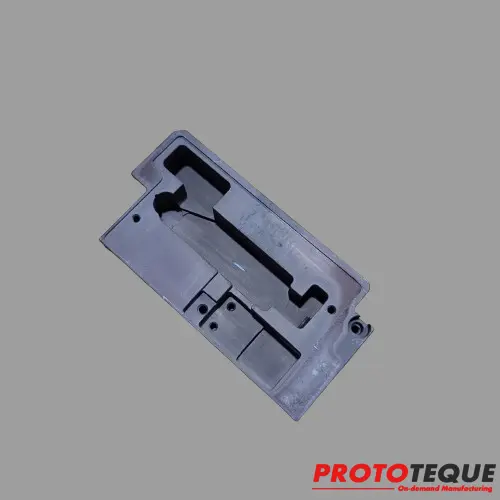
Heat treatment
Your questions answered
Common questions
Do you offer finishing options for steel CNC machined parts?
Yes, we offer a wide range of finishing options to enhance the appearance, durability, and functionality of your steel CNC machined parts. Our services include:
Protective Coatings: Powder coating, electrophoresis, zinc plating, chrome plating, nickel plating, and painting.
Surface Enhancement: Black oxide, nitriding, and carburizing.
Welding: For joining multiple parts or repairing defects.
Other Finishes: Phosphating and PVD coatings.
We can tailor our finishing process to meet your specific requirements.
Steel CNC Machining VS Metal 3D Printing
Choosing between steel CNC machining and metal 3D printing depends on a variety of factors. Both processes have their own strengths and limitations.
Steel CNC Machining
Ideal for: Simple to moderately complex parts requiring high precision, tight tolerances, and excellent surface finish.
Advantages: Typically faster production times for larger quantities, lower cost per part, superior dimensional accuracy, and a wider range of material options.
Limitations: Less suitable for highly complex internal structures or intricate geometries.
Metal 3D Printing
Ideal for: Complex parts with intricate geometries, low-volume production, and rapid prototyping.
Advantages: Ability to create complex shapes, no tooling required, potential for lightweight designs.
Limitations: Generally slower production times, higher cost per part, limitations in material options, and often requires post-processing for optimal surface finish and mechanical properties.
In many cases, a combination of both processes can be beneficial. For instance, metal 3D printing can be used to create a complex mold or pattern, which can then be used for CNC machining to produce final parts with high precision and accuracy.
Ultimately, the best choice depends on specific project requirements. Factors such as part complexity, quantity, material selection, budget, and lead time should be carefully considered when making a decision.
Steel CNC Machining VS Metal Injection Molding (MIM)
Steel CNC machining and metal injection molding (MIM) are both effective methods for producing metal parts, each with its own strengths and limitations.
Steel CNC Machining: Offers flexibility in design and material choice, making it ideal for rapid prototyping, low to medium volume production, and parts requiring high precision and tight tolerances. While unit costs are higher compared to MIM for high volumes, there’s no upfront tooling cost.
Metal Injection Molding (MIM): Excels in producing complex, small-to-medium-sized parts in high volumes. MIM offers lower unit costs for large quantities due to tooling amortization. However, there’s a significant upfront investment in tooling. MIM also has limitations in terms of part size, material options, and strength compared to some steel alloys. A unique advantage of MIM is the ability to insert different metal alloys into the mold, creating hybrid parts.
Key Differences:
Feature | Steel CNC Machining | Metal Injection Molding (MIM) |
Unit Cost | Higher for lower volumes | Lower for high volumes |
Tooling Cost | Low | High |
Lead Time | Short | Longer due to tooling |
Part Complexity | Suitable for simple to moderately complex parts | Ideal for complex parts with intricate details |
Material Options | Wide range of steel alloys | Limited metal options, but allows for inserts |
Part Size | Versatile | Limitations on minimum and maximum part size |
Material Waste | Higher due to material removal | Minimal waste |
Strength | Generally higher for some steel alloys | Lower density can impact strength in some cases |
What is the most common steel for machining?
The most common steel for machining is mild steel. It’s often referred to as 1018 steel or AISI 1018.